
Starting a blog is easy. Consistently publishing high-quality content that attracts readers and ranks on Google is the real challenge. Best AI Writing Tools for Bloggers.
Every blogger eventually faces the same obstacles:
- Staring at a blank page with no idea where to begin
- Spending hours editing instead of publishing
- Struggling to maintain a consistent writing schedule
- Balancing SEO with natural, engaging content
- Managing multiple blog posts, social media updates, and email newsletters
The right writing tool can streamline these tasks, helping you focus more on strategy and less on repetitive work.
But not every platform is built for bloggers. Some excel at editing, others specialize in SEO, and a few are designed for complete content workflows. Choosing the wrong one can waste both time and money.
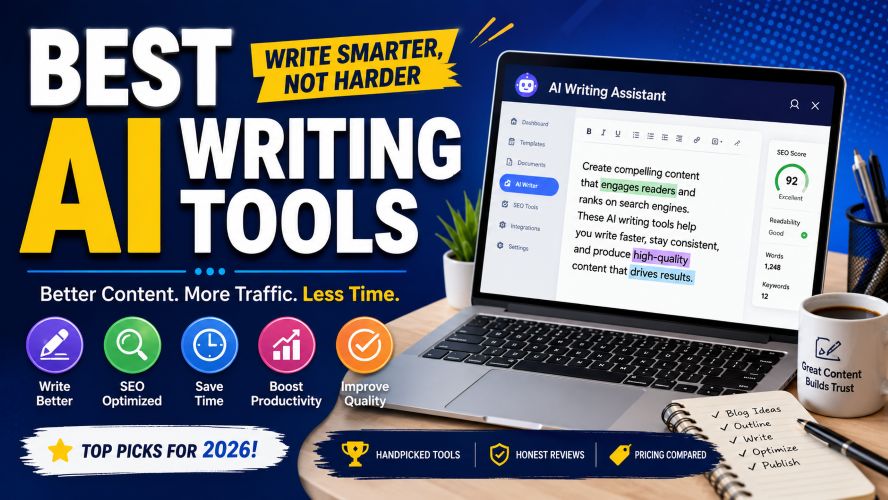
Best AI Writing Tools for Bloggers
This guide compares the best AI writing tools for bloggers, highlighting their strengths, limitations, pricing, and ideal use cases. Whether you’re a beginner launching your first WordPress site or an experienced affiliate marketer managing multiple blogs, you’ll find a tool that fits your workflow.
Quick Summary
If you’re short on time, here’s a quick overview.
| Tool | Best For | Free Plan | Overall Rating |
|---|---|---|---|
| Jasper | Professional bloggers & agencies | No | ⭐⭐⭐⭐⭐ |
| Writesonic | SEO blog writing | Yes | ⭐⭐⭐⭐⭐ |
| Copy.ai | Marketing and promotional content | Yes | ⭐⭐⭐⭐☆ |
| Grammarly | Editing and proofreading | Yes | ⭐⭐⭐⭐⭐ |
| Rytr | Budget-conscious beginners | Yes | ⭐⭐⭐⭐☆ |
| QuillBot | Rewriting and paraphrasing | Yes | ⭐⭐⭐⭐☆ |
| Notion AI | Content planning and organization | Limited | ⭐⭐⭐⭐☆ |
Our Top Picks
Best Overall: Jasper
Best for SEO Blogging: Writesonic
Best Budget Option: Rytr
Best for Editing: Grammarly
Best for Content Planning: Notion AI
Why Bloggers Are Using Writing Tools More Than Ever
Blogging has changed dramatically over the last few years.
Readers expect well-structured articles that answer their questions quickly, while search engines reward content that is helpful, original, and easy to read.
Publishing one article each month may have worked in the past. Today, successful bloggers often maintain consistent publishing schedules while also managing email campaigns, social media posts, product reviews, and affiliate content.
Writing tools help simplify these workflows by assisting with tasks such as:
- Creating detailed article outlines
- Improving readability
- Organizing ideas
- Refining sentence structure
- Maintaining a consistent tone
- Reducing editing time
- Speeding up research and planning
- Producing SEO-friendly drafts
Instead of replacing creativity, these platforms act as productivity assistants, helping bloggers spend more time on research, storytelling, and audience engagement.
How We Chose the Best Writing Tools
Rather than focusing on flashy features, we evaluated each platform using criteria that matter most to bloggers.
Ease of Use
A clean, intuitive interface saves valuable time, especially for beginners.
Writing Quality
We considered how well each tool supports clear, engaging, and readable content.
SEO Features
Search optimization is essential for bloggers who rely on organic traffic.
Editing Capabilities
Grammar, spelling, readability, and style suggestions were all taken into account.
Value for Money
The best tool isn’t always the most expensive. We looked at pricing relative to features offered.
Collaboration
For bloggers working with editors, freelancers, or virtual assistants, collaboration features are an added advantage.
What Makes a Great Writing Tool for Bloggers?
Not every blogger has the same goals.
A travel blogger may prioritize storytelling, while an affiliate marketer focuses on product comparisons and SEO. A business owner might need polished emails and landing pages alongside blog content.
The best writing tools generally offer a balance of these features:
- Long-form article support
- Readability improvements
- Content organization
- SEO optimization
- Grammar and spelling assistance
- Templates for common writing tasks
- Collaboration options
- Export or publishing flexibility
Keeping these factors in mind will help you choose a platform that matches your workflow.
Must Read : Every Major AI Model Compared: ChatGPT vs Claude vs Gemini vs Grok vs DeepSeek
1. Jasper
Best Overall for Professional Bloggers
If blogging is more than just a hobby, Jasper is one of the most comprehensive writing platforms available.
It is designed to support complete content workflows rather than isolated writing tasks. From planning a blog series to refining a finished draft, Jasper offers tools that help maintain consistency across multiple projects.
Key Features
- Long-form writing support
- Brand voice customization
- Marketing templates
- Campaign planning
- Team collaboration
- Workflow management
What We Like
- Excellent for managing large content projects
- Strong collaboration features
- Helpful workflow organization
- Suitable for agencies and professional bloggers
Drawbacks
- Premium pricing may not suit beginners
- Offers more features than casual bloggers typically need
Best For
- Full-time bloggers
- Affiliate marketers
- Digital agencies
- Content teams
- Businesses with multiple contributors
Bottom Line
If your blog is part of a growing business, Jasper offers a polished experience with features that scale as your content strategy expands.
2. Writesonic
Best for SEO-Focused Blogging
For bloggers who prioritize search engine traffic, Writesonic stands out with its SEO-focused workflows.
It combines writing assistance with optimization tools that help structure content around search intent, making it easier to produce articles designed for visibility.
Key Features
- SEO-focused article creation
- Blog outlines
- Landing page templates
- Product descriptions
- Content planning assistance
Advantages
- Beginner-friendly interface
- Helpful SEO suggestions
- Affordable pricing options
- Fast content workflow
Limitations
- Advanced features are available only on paid plans
- Some workflows require manual refinement for highly specialized topics
Best For
- Affiliate bloggers
- Niche website owners
- SEO professionals
- Content marketers
Bottom Line
If your primary goal is increasing organic traffic, Writesonic provides an excellent balance between writing support and SEO-focused features.
3. Grammarly
Best for Editing and Proofreading
Even experienced bloggers make mistakes.
Typos, awkward phrasing, inconsistent tone, and overly complex sentences can reduce reader trust and increase bounce rates.
Grammarly focuses on improving what you’ve already written rather than replacing your writing process.
Key Features
- Grammar correction
- Spelling checks
- Readability improvements
- Tone suggestions
- Style consistency
- Browser extension for seamless editing
Pros
- Extremely easy to use
- Generous free version
- Works across browsers and applications
- Improves clarity without changing your voice
Cons
- Not intended for complete article creation
- Advanced suggestions require a paid subscription
Best For
- Bloggers
- Students
- Freelancers
- Business owners
- Anyone who wants polished writing
Bottom Line
Grammarly remains one of the most reliable editing companions for bloggers who value professionalism and readability.
4. Rytr
Best Budget-Friendly Writing Tool for New Bloggers
Starting a blog often comes with a limited budget. Between web hosting, a domain name, premium themes, SEO plugins, and email marketing software, costs can add up quickly.
Rytr offers a practical solution for bloggers who want a capable writing assistant without a high monthly subscription.
Its clean interface and straightforward workflow make it especially appealing to beginners.
Key Features
- Blog post outlines
- Article introductions
- Product descriptions
- Email writing
- Social media captions
- Multiple writing tones
- Built-in plagiarism checker (premium)
Pros
- Affordable pricing
- Beginner-friendly dashboard
- Quick learning curve
- Decent free plan
- Supports multiple writing styles
Cons
- Fewer advanced customization options
- Long-form projects may require more manual editing
Best For
- Beginner bloggers
- Students
- Freelancers
- Small websites
- Side-hustle bloggers
Bottom Line
If you’re launching your first WordPress blog, Rytr offers excellent value without overwhelming you with enterprise-level features.
5. Copy.ai
Best for Affiliate Marketing and Promotional Content
Bloggers don’t just publish articles.
They also write:
- Email newsletters
- Product reviews
- Landing pages
- Social media posts
- Affiliate promotions
- Website copy
Copy.ai performs particularly well for these shorter marketing-focused writing tasks.
Its template library helps speed up repetitive work while maintaining a consistent style.
Key Features
- Marketing templates
- Product descriptions
- Email campaigns
- Landing pages
- Social media content
- Workflow automation
Pros
- Easy to use
- Large template collection
- Great for promotional content
- Suitable for teams
Cons
- Long-form blog writing isn’t its strongest area
- Some advanced features are locked behind higher plans
Best For
- Affiliate marketers
- E-commerce websites
- Digital marketers
- Bloggers promoting products
Bottom Line
If your income depends on affiliate commissions or digital products, Copy.ai can simplify much of your marketing workflow.
6. QuillBot
Best for Rewriting and Improving Existing Content
Not every blogging session starts with a blank page.
Sometimes you already have a draft but need to improve clarity, remove repetition, or make paragraphs easier to read.
QuillBot specializes in refining existing writing rather than building complete articles from scratch.
Key Features
- Paraphrasing
- Grammar correction
- Summarization
- Citation support
- Sentence restructuring
Pros
- Excellent rewriting quality
- Affordable plans
- Simple interface
- Useful for editing old articles
Cons
- Limited long-form workflow
- Not designed as a complete blogging platform
Best For
- Updating old blog posts
- Academic writing
- Content refreshes
- Editors
Bottom Line
Refreshing older content is an effective SEO strategy, and QuillBot makes that process faster while preserving readability.
7. Notion AI
Best for Content Planning and Blog Management
Successful blogging isn’t just about writing.
Planning keywords, organizing research, tracking publishing schedules, and managing editorial calendars are equally important.
Notion AI integrates writing assistance into an all-in-one productivity workspace.
Key Features
- Editorial calendars
- Meeting notes
- Content planning
- Research organization
- Documentation
- Team collaboration
Pros
- Excellent organization
- Great for planning
- Powerful collaboration features
- Ideal for content teams
Cons
- Best suited for existing Notion users
- Learning curve for beginners
Best For
- Professional bloggers
- Agencies
- Teams
- Content managers
Bottom Line
If organization is your biggest challenge, Notion AI helps streamline your entire content workflow.
Feature Comparison Table
| Feature | Jasper | Writesonic | Grammarly | Rytr | Copy.ai | QuillBot | Notion AI |
|---|---|---|---|---|---|---|---|
| Long-form Writing | ⭐⭐⭐⭐⭐ | ⭐⭐⭐⭐⭐ | ⭐ | ⭐⭐⭐ | ⭐⭐⭐ | ⭐ | ⭐⭐⭐ |
| SEO Support | ⭐⭐⭐⭐ | ⭐⭐⭐⭐⭐ | ⭐ | ⭐⭐⭐ | ⭐⭐⭐ | ⭐ | ⭐⭐ |
| Grammar Editing | ⭐⭐⭐⭐ | ⭐⭐⭐ | ⭐⭐⭐⭐⭐ | ⭐⭐⭐ | ⭐⭐⭐ | ⭐⭐⭐⭐⭐ | ⭐⭐⭐ |
| Templates | ⭐⭐⭐⭐⭐ | ⭐⭐⭐⭐ | ⭐ | ⭐⭐⭐⭐ | ⭐⭐⭐⭐⭐ | ⭐ | ⭐⭐ |
| Collaboration | ⭐⭐⭐⭐⭐ | ⭐⭐⭐ | ⭐⭐⭐ | ⭐⭐ | ⭐⭐⭐⭐ | ⭐ | ⭐⭐⭐⭐⭐ |
| Beginner Friendly | ⭐⭐⭐ | ⭐⭐⭐⭐⭐ | ⭐⭐⭐⭐⭐ | ⭐⭐⭐⭐⭐ | ⭐⭐⭐⭐ | ⭐⭐⭐⭐⭐ | ⭐⭐⭐ |
Pricing Overview
Note: Prices change over time. Always check the official website for the latest plans and offers.
| Tool | Free Version | Premium Starts At |
| Jasper | No | Premium pricing |
| Writesonic | Yes | Affordable |
| Grammarly | Yes | Affordable |
| Rytr | Yes | Budget-friendly |
| Copy.ai | Yes | Mid-range |
| QuillBot | Yes | Low-cost |
| Notion AI | Limited | Mid-range |
Which Writing Tool Is Right for Your Blogging Style?
For Beginner Bloggers
Starting out means keeping costs low while learning the basics.
Recommended:
- Rytr
- Grammarly
Why?
They are affordable, easy to learn, and don’t require technical knowledge.
Must Read : 10 AI Trends Changing Tech Jobs by 2029
For Affiliate Bloggers
Affiliate content requires:
- Product reviews
- Buying guides
- Comparison posts
- SEO optimization
Recommended:
- Writesonic
- Jasper
- Copy.ai
These platforms support long-form articles and promotional content more effectively.
For Niche Website Owners
If organic search traffic is your primary source of visitors, prioritize SEO-focused workflows.
Recommended:
- Writesonic
- Jasper
For Freelance Writers
Freelancers often juggle multiple clients with different requirements.
Useful features include:
- Collaboration
- Editing
- Multiple writing styles
- Fast workflows
Recommended:
- Jasper
- Grammarly
- Notion AI
For Business Bloggers
Businesses frequently publish:
- Educational articles
- Customer guides
- Case studies
- Email campaigns
Recommended:
- Jasper
- Copy.ai
- Notion AI
Real-World Blogging Scenarios
Scenario 1: Publishing Weekly Product Reviews
A technology blogger publishing smartphone reviews every week needs:
- Structured outlines
- Clear comparisons
- Readable formatting
- Consistent publishing
A workflow combining Writesonic for drafting and Grammarly for final editing can save significant time.
Scenario 2: Updating Old Blog Posts
Refreshing older content often improves search visibility without creating entirely new articles.
QuillBot helps rewrite outdated sections, while Grammarly polishes the final copy.
Scenario 3: Managing Multiple Websites
An affiliate marketer operating several niche blogs needs more than writing assistance.
Planning, collaboration, and workflow management become increasingly important.
Jasper combined with Notion AI creates an efficient system for managing multiple content calendars.
Scenario 4: Growing a Personal Blog
A solo blogger with a limited budget may prioritize affordability.
Rytr provides enough functionality to produce consistent posts while keeping monthly costs manageable.
Tips for Getting the Most from Your Writing Tool
Regardless of which platform you choose, your results will improve when you:
- Start with a detailed outline.
- Research your topic thoroughly before writing.
- Focus on helping readers solve a problem.
- Edit every article before publishing.
- Add personal insights and examples.
- Include original screenshots or photos whenever possible.
- Update important articles regularly.
- Follow on-page SEO best practices.
Remember, the software supports your workflow—it doesn’t replace careful research, expertise, or thoughtful editing.
Complete Buying Guide: How to Choose the Best Writing Tool for Your Blog
With so many options available, it’s easy to be distracted by long feature lists or flashy marketing. The best choice isn’t necessarily the most expensive platform—it’s the one that fits your workflow and helps you publish consistently.
Before subscribing to any writing tool, consider these key factors.
1. Define Your Blogging Goals
Start by asking yourself:
- Do you publish one article a month or several each week?
- Is your blog focused on affiliate marketing, education, news, or personal experiences?
- Do you work alone or with a team?
A hobby blogger may only need editing support, while a professional publisher benefits from workflow management and collaboration features.
2. Think About Your Budget
Monthly subscriptions can add up quickly.
Besides a writing tool, bloggers often pay for:
- Web hosting
- Domain registration
- Premium WordPress themes
- SEO plugins
- Email marketing platforms
- Keyword research tools
- Graphic design software
If you’re just starting out, begin with a free or affordable plan. Upgrade only when your publishing schedule or business needs justify the additional cost.
3. Consider Ease of Use
A feature-rich platform isn’t always the best choice.
A clean dashboard and intuitive workflow often save more time than dozens of advanced settings you’ll never use.
Look for:
- Easy navigation
- Fast loading speed
- Minimal learning curve
- Helpful documentation
- Responsive customer support
4. Prioritize SEO-Friendly Features
For bloggers who rely on organic traffic, SEO matters.
Useful capabilities include:
- Readability suggestions
- Heading organization
- Keyword placement guidance
- Content structure recommendations
- Internal linking reminders
These features help create articles that are easier for both readers and search engines to understand.
5. Evaluate Collaboration Tools
If you work with editors, freelance writers, or virtual assistants, collaboration becomes important.
Helpful features include:
- Shared workspaces
- Comments and feedback
- Version history
- Team permissions
- Project management
These tools simplify the publishing process as your blog grows.
Common Mistakes Bloggers Make When Choosing Writing Tools
Avoiding these mistakes can save you time and money.
Buying the Most Expensive Option
Premium pricing doesn’t automatically mean better value.
Choose the tool that solves your specific problems rather than the one with the longest feature list.
Ignoring the Free Trial
Most platforms offer a free plan or trial period.
Use this time to:
- Test the interface
- Explore key features
- Write a complete article
- Compare your workflow with other options
Hands-on experience is often the best way to decide.
Expecting Perfect First Drafts
No writing tool produces a publish-ready article every time.
Successful bloggers still:
- Research thoroughly
- Verify facts
- Add original insights
- Edit carefully
- Optimize images
- Improve formatting
The best results come from combining good tools with thoughtful editing.
Forgetting About Long-Term Costs
A low introductory price may increase over time.
Before subscribing, check:
- Renewal pricing
- Monthly vs. annual plans
- Usage limits
- Additional fees for premium features
Understanding the full cost helps avoid surprises later.
Alternatives Worth Considering
Depending on your workflow, you may not need an all-in-one writing platform.
Here are a few alternatives that complement or replace certain features.
For Grammar and Editing
- Grammarly
- ProWritingAid
- Hemingway Editor
These tools focus on improving clarity, grammar, and readability.
For SEO Research
Dedicated SEO platforms can help with:
- Keyword research
- Search intent analysis
- Competitor research
- Content optimization
Pairing an SEO tool with a writing platform often creates a more effective workflow.
Must Read : 15 AI Coding Assistants Compared: Which one is Best AI coding assistant?
For Content Planning
If organization is your biggest challenge, project management tools can help you:
- Schedule posts
- Track deadlines
- Store research
- Manage editorial calendars
Good planning often improves productivity more than writing speed alone.
Best Writing Tools by Category
| Category | Recommended Tool |
|---|---|
| Best Overall | Jasper |
| Best for SEO Blogging | Writesonic |
| Best Budget Choice | Rytr |
| Best for Editing | Grammarly |
| Best for Marketing Copy | Copy.ai |
| Best for Rewriting | QuillBot |
| Best for Productivity | Notion AI |
Frequently Asked Questions
What is the best writing tool for bloggers?
The best choice depends on your needs. Bloggers focused on long-form content and team collaboration may prefer Jasper, while those prioritizing SEO often choose Writesonic. Beginners may find Rytr or Grammarly easier to start with.
Which writing tool is best for affiliate marketing?
Affiliate marketers typically benefit from tools that support buying guides, comparison articles, and promotional content. Writesonic, Jasper, and Copy.ai are popular options for these workflows.
Are free plans enough for new bloggers?
Yes. Many beginners can successfully publish quality content using free plans while learning the basics. As your publishing frequency increases, upgrading to a paid plan may provide additional convenience and advanced features.
Can writing tools improve SEO rankings?
Writing tools can improve readability, organization, and content structure. However, rankings also depend on factors such as keyword research, search intent, website speed, backlinks, and overall content quality.
Should I use more than one writing tool?
Many experienced bloggers combine different tools. For example, one tool may help with drafting, while another focuses on grammar, readability, or project organization.
Do writing tools replace human editing?
No.
Careful editing remains essential to ensure accuracy, consistency, and originality. Human review also helps maintain your unique writing style and voice.
Which writing tool offers the best value for money?
Rytr provides excellent value for bloggers with limited budgets, while Grammarly offers strong editing capabilities through its free plan. The right choice depends on your publishing goals and workflow.
Are these tools suitable for professional blogging?
Yes. Many full-time bloggers, agencies, and businesses use writing and editing platforms to streamline their content creation and publishing processes.
Our Recommendations
Choosing the right platform depends on where you are in your blogging journey.
If You’re Just Starting
Choose Rytr combined with Grammarly.
You’ll get an affordable workflow that covers drafting, editing, and proofreading without a significant monthly investment.
If SEO Is Your Priority
Choose Writesonic.
Its SEO-focused workflow makes it well suited for bloggers who want to increase organic traffic through well-structured content.
If Blogging Is Your Full-Time Business
Choose Jasper.
Its collaboration features, workflow management, and long-form capabilities make it a strong option for professional publishers and agencies.
If You Already Use Notion
Adding Notion AI keeps planning, research, and writing in a single workspace, reducing the need to switch between multiple applications.
Final Verdict
Publishing successful blog content isn’t about writing faster—it’s about creating articles that are helpful, well-structured, and valuable to readers.
The right writing tool should make your workflow smoother, not more complicated.
For many professional bloggers, Jasper stands out as the best all-around solution thanks to its comprehensive workflow and collaboration features.
If your primary goal is improving search visibility, Writesonic offers an impressive balance of writing assistance and SEO support.
Bloggers working with tighter budgets will appreciate Rytr, while Grammarly remains one of the most dependable editing tools available for polishing every article before publication.
Ultimately, the best choice is the one that matches your goals, budget, and publishing habits. Take advantage of free plans or trial periods whenever possible, test each platform with your own projects, and choose the one that fits naturally into your workflow.
I use Jasper and it’s good
Hey Addison,
Thanks for commenting here. Yeah Jasper is good, but is it the best?