
Buying or selling a used vehicle today feels easier than ever—until it isn’t.
Hidden accidents, open safety recalls, branded titles, or rolled-back odometers can turn a “great deal” into a long-term headache. That’s why vehicle history reports matter more than ever in 2026.
But with so many VIN check services available, a common question keeps popping up:
Is VinCheckup accurate—and can you trust it before making a big decision?
In this in-depth VinCheckup review, I’ll break down how it works, what data it actually shows, where it shines, where it falls short, and who it’s best for—based on real-world use cases and industry expectations.
Quick Summary
- VinCheckup provides fast, easy-to-read vehicle history reports using multiple government and private data sources
- Covers accidents, recalls, liens, title brands, theft, mileage, ownership history, and more
- Accuracy depends on reported data (like all VIN check services)
- More affordable than many premium competitors
- Best for buyers and sellers who want solid coverage without paying premium prices
👉 Best for: Used car buyers, private sellers, first-time buyers, and budget-conscious shoppers
What Is VinCheckup?
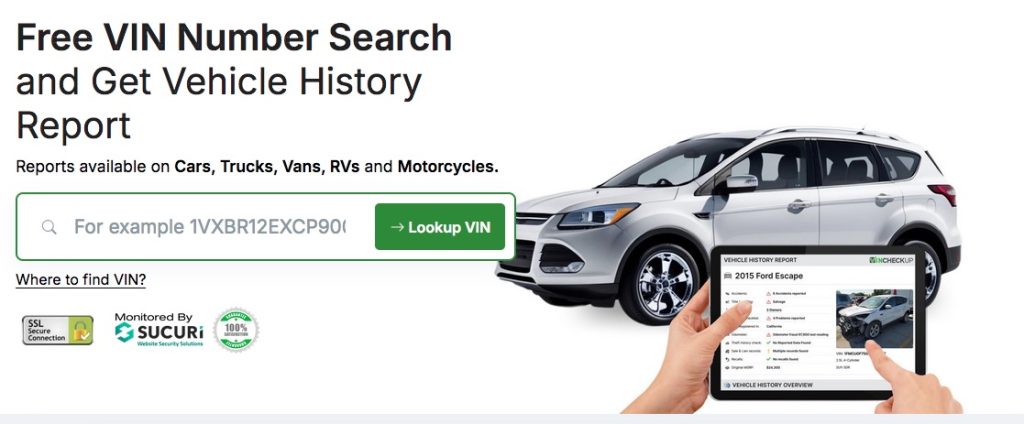
VinCheckup is an online vehicle history report service that allows users to instantly check a car, truck, motorcycle, RV, or van using its VIN (Vehicle Identification Number).
Instead of relying on a single database, VinCheckup compiles reports using dozens of federal, state, insurance, auction, and industry data sources, including real-time feeds when available.
As of 2026, the platform has processed 28 million+ VIN searches, making it one of the more widely used alternatives to bigger-name services.
Where Can You Find Your VIN?
Before running a report, you’ll need the VIN. You can find it on:
- Vehicle title document
- Registration paperwork
- Insurance policy
- Driver-side dashboard (visible through windshield)
- Driver-side door jamb
Once you have the VIN, the lookup process takes under a minute.
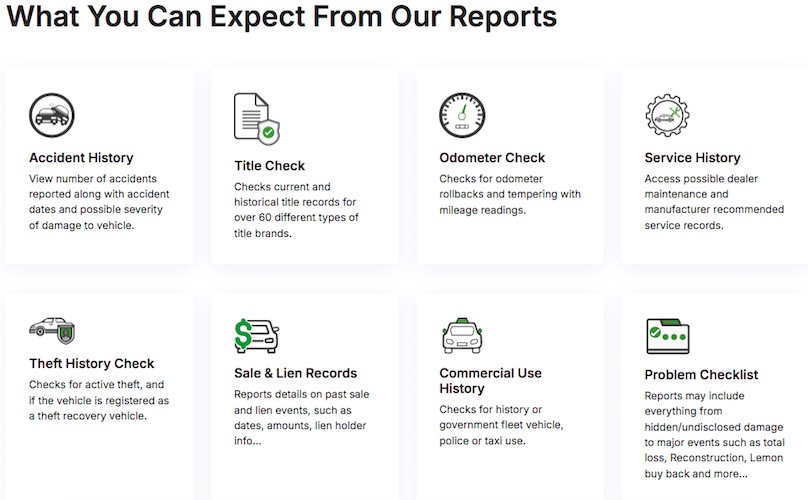
How VinCheckup Works (Step-by-Step)
Step 1: Enter VIN & Search
Input the 17-character VIN into the search box.
Step 2: Review Preliminary Results
You’ll see basic vehicle info and confirmation that data is available.
Step 3: Register & Download Full Report
Unlock the full, detailed vehicle history report.
The entire process is designed to be beginner-friendly—even if you’ve never checked a VIN before.
What Information Does a VinCheckup Report Include?
VinCheckup reports go far beyond a simple free VIN decoder.
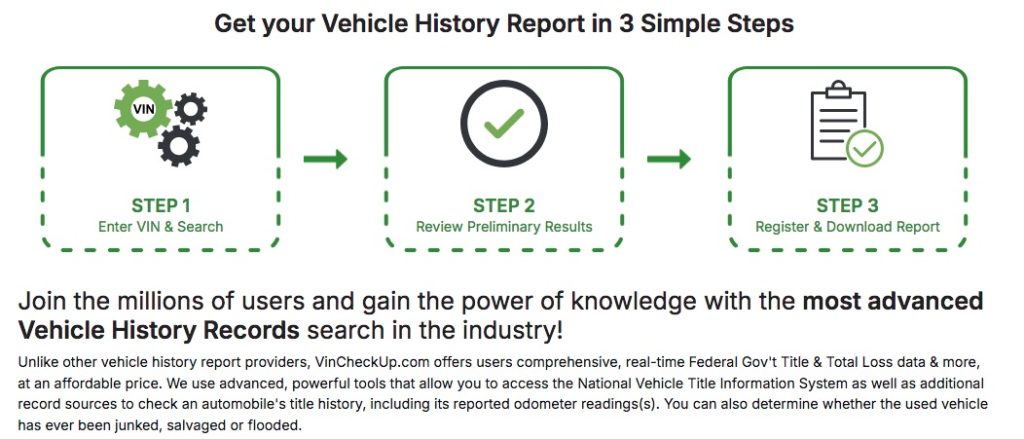
🚗 Vehicle History Highlights
- Accident history (reported incidents and severity)
- Title information (clean, salvage, rebuilt, junk, flood, fire)
- Odometer readings and discrepancy checks
- Open safety recalls (important in 2026 due to ongoing airbag issues)
- Ownership history (number of owners, length of ownership)
- Theft and recovery records
- Sale & lien records (banks, repossessions, status)
- Auction history & photos (when available)
- Commercial or government use (taxi, rental, police)
🔍 Additional Details
- Vehicle specifications (engine, trim, drivetrain)
- Original MSRP and estimated market value
- Fuel efficiency data
- Warranty information (if available)
- Maintenance and service records (limited but useful)
Must Read : QnE Companion Review: Free Windows Utilities to Boost Productivity
How Accurate Is VinCheckup in 2026?
This is the most important part of any VinCheckup review.
Short Answer:
VinCheckup is accurate based on officially reported data—but no VIN check is perfect.
Why Accuracy Depends on Reporting
Like all vehicle history report providers, VinCheckup can only display information that was:
- Reported to insurance companies
- Filed with state DMVs
- Logged in auctions or title databases
- Submitted by repair facilities or government agencies
If an accident was never reported or a repair was paid in cash, no VIN service can magically uncover it.
What VinCheckup Does Well
- Uses multiple data sources, not just one
- Pulls real-time federal title and total loss data when available
- Cross-checks odometer readings to detect inconsistencies
- Flags open recalls that many buyers overlook
Where It Can Fall Short
- Minor accidents may not appear if unreported
- Service history is not always complete
- Older vehicles may have limited digital records
Bottom line: VinCheckup is as accurate as the data ecosystem allows—and competitive with major alternatives in 2026.
VinCheckup Pros and Cons
✅ Pros
- Affordable compared to premium competitors
- Easy-to-read, beginner-friendly reports
- Covers cars, trucks, motorcycles, RVs, and vans
- Strong recall and title brand coverage
- Fast results (usually under 60 seconds)
❌ Cons
- Not all service records are included
- Unreported accidents won’t appear
- Fewer brand-recognition perks than top-tier providers
VinCheckup vs Alternatives (Quick Comparison)
| Feature | VinCheckup | Carfax | AutoCheck |
|---|---|---|---|
| Price | Lower | Higher | Medium |
| Title & Total Loss Data | ✅ | ✅ | ✅ |
| Accident Reports | ✅ | ✅ | ✅ |
| Recall Tracking | ✅ | ✅ | Limited |
| Ease of Use | Very Easy | Easy | Moderate |
| Best For | Budget buyers | Dealers | Auctions |
👉 If you want solid data without paying premium prices, VinCheckup offers strong value.
Real-World Use Cases
For Used Car Buyers
- Avoid vehicles with hidden title issues
- Check for open recalls before purchase
- Negotiate price using accident or lien history
For Private Sellers
- Increase buyer trust with transparency
- Speed up the selling process
- Attract serious, informed buyers
For First-Time Buyers
- Simple layout with no confusing jargon
- Helps spot red flags early
- Reduces risk of fraud or overpaying
Must Read : Aiarty Image Enhancer Review – Upscale Photos to 32K Naturally
Is a Vehicle History Report Enough?
No—and that’s actually a good thing.
A vehicle history report should always be combined with:
- A professional pre-purchase inspection
- A thorough test drive
- Visual checks for mismatched paint or frame damage
Think of VinCheckup as your first line of defense, not the final verdict.
Things to Consider Before Buying a VIN Report
- Always double-check the VIN for typos
- Use reports to ask smarter questions, not assume perfection
- Compare history findings with seller disclosures
- Remember: clean history ≠ perfect condition
Must Read : Best Budget Earbuds in 2026
FAQs About VinCheckup (2026)
1. Is VinCheckup legit?
Yes, VinCheckup is a legitimate vehicle history report provider using government and private data sources.
2. How fast is the VinCheckup report?
Most reports are generated in under one minute after entering a valid VIN.
3. Does VinCheckup show accidents?
Yes, it shows reported accidents, including dates and severity when available.
4. Can VinCheckup detect odometer fraud?
It cross-checks mileage records to identify inconsistencies or rollback indicators.
5. Does VinCheckup show recalls?
Yes, including open safety recalls—which is critical for buyer safety.
6. Is VinCheckup better than free VIN checks?
Absolutely. Free checks provide limited data, while VinCheckup offers comprehensive reports.
7. Will VinCheckup show flood or salvage titles?
Yes, branded titles like flood, salvage, rebuilt, and junk are included when reported.
Final Verdict: Is VinCheckup Worth It in 2026?
If you’re looking for a reliable, affordable, and easy-to-use vehicle history report, VinCheckup is absolutely worth considering in 2026.
It won’t replace a mechanic’s inspection—but it can help you:
- Avoid costly mistakes
- Spot red flags early
- Negotiate with confidence
- Buy or sell with transparency
In a market where one hidden issue can cost thousands, VinCheckup gives you clarity—and peace of mind—without overcomplicating the process.
Great breakdown of VinCheckup and its accuracy in 2026. I liked how the article highlighted both the strengths and limitations of the report, which helps buyers set realistic expectations. This is a useful read for anyone doing due diligence before purchasing a used car.
I am glad it helped you.