


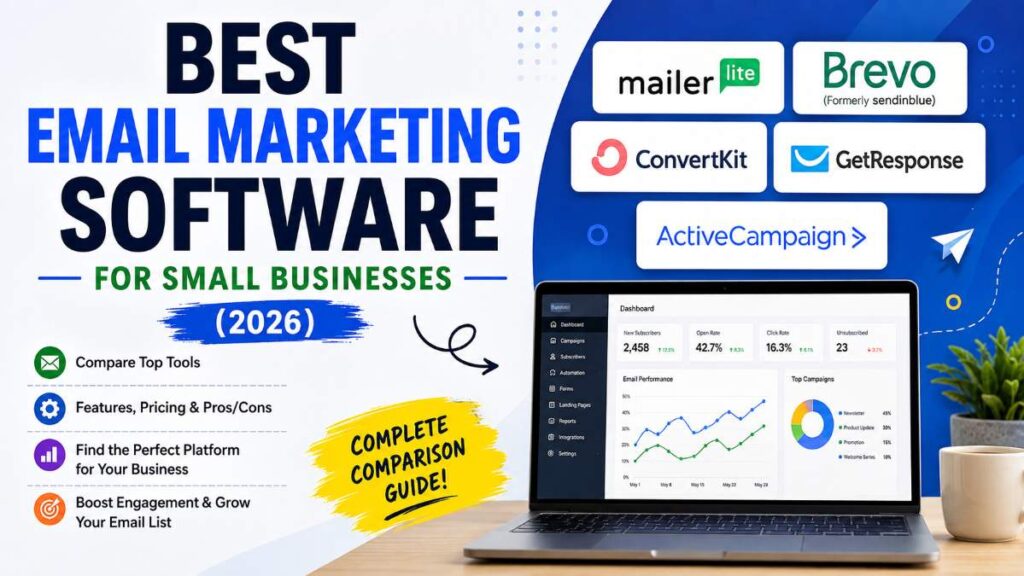
Email marketing continues to deliver one of the highest returns among digital marketing channels. But with dozens of platforms promising better automation, higher open rates, and easier campaign management, choosing the right one can quickly become overwhelming.
Some tools are designed for beginners who simply want to send newsletters. Others focus on advanced automation, customer journeys, eCommerce integrations, and CRM features.

So, which one is worth your money?
In this guide, we’ll compare the best email marketing software based on features, pricing, ease of use, automation capabilities, and overall value. Whether you’re a blogger, affiliate marketer, online store owner, freelancer, or small business, you’ll find a platform that fits your needs.
Quick Summary
If you’re in a hurry, here’s a quick comparison.
| Software | Best For | Free Plan | Automation | Ease of Use |
|---|---|---|---|---|
| MailerLite | Beginners | ✅ | Excellent | ⭐⭐⭐⭐⭐ |
| Brevo | Small Businesses | ✅ | Excellent | ⭐⭐⭐⭐☆ |
| ConvertKit | Creators & Bloggers | ✅ | Excellent | ⭐⭐⭐⭐⭐ |
| GetResponse | Marketing Automation | Limited | Advanced | ⭐⭐⭐⭐☆ |
| ActiveCampaign | Growing Businesses | No | Industry-Leading | ⭐⭐⭐⭐☆ |
Recommended Overall: MailerLite
Best Budget Option: Brevo
Best for Bloggers: ConvertKit
Best Advanced Automation: ActiveCampaign
Why Choosing the Right Email Marketing Software Matters
Email marketing is much more than sending newsletters.
The right platform helps you:
- Build your email list faster
- Automate repetitive tasks
- Increase sales through personalized campaigns
- Recover abandoned carts
- Improve customer relationships
- Track campaign performance
A poor choice, on the other hand, can limit your growth and cost more as your subscriber list expands.
That’s why comparing features before signing up is important.
Must Read : Luminar Update 2026: What Photographers Need to Know
Best Email Marketing Software Compared
1. MailerLite – Best Overall for Beginners
If you’re looking for a clean interface, affordable pricing, and powerful automation, MailerLite is difficult to beat.
It offers nearly everything most businesses need without unnecessary complexity.
Key Features
- Drag-and-drop email builder
- Landing pages
- Website builder
- Automation workflows
- Popups and forms
- Subscriber segmentation
- A/B testing
Pros
- Very beginner-friendly
- Excellent free plan
- Fast email editor
- Affordable upgrades
- Good deliverability
Cons
- Limited advanced CRM features
- Fewer third-party integrations than some competitors
Best For
- Bloggers
- Affiliate marketers
- Freelancers
- Small businesses
2. Brevo – Best Budget Email Marketing Platform
Brevo has evolved into a complete marketing suite.
Unlike many competitors that charge based on subscribers, Brevo primarily charges based on emails sent, making it attractive for businesses with large subscriber lists.
Key Features
- Email campaigns
- SMS marketing
- WhatsApp campaigns
- Marketing automation
- CRM
- Live chat
- Transactional emails
Pros
- Excellent value
- Free CRM
- Multi-channel marketing
- Good automation
Cons
- Daily sending limits on free plan
- Email builder could be smoother
Best For
- Startups
- Small businesses
- Online stores
3. ConvertKit – Best for Bloggers and Content Creators
ConvertKit focuses on creators rather than large enterprises.
Its automation system is simple but incredibly effective.
Standout Features
- Visual automation builder
- Creator-friendly landing pages
- Digital product selling
- Subscriber tagging
- Email sequences
Pros
- Excellent automation
- Clean interface
- Great for newsletters
- Easy segmentation
Cons
- Premium plans become expensive
- Limited design templates
Best For
- Bloggers
- YouTubers
- Course creators
- Newsletter publishers
4. GetResponse – Best All-in-One Marketing Platform
GetResponse goes beyond email marketing.
It includes webinar hosting, funnels, landing pages, automation, and eCommerce tools in one platform.
Features
- Webinar hosting
- Marketing automation
- Landing pages
- Conversion funnels
- AI email builder
- eCommerce integrations
Pros
- Powerful automation
- Built-in webinars
- Excellent reporting
- Strong eCommerce features
Cons
- Learning curve
- Higher pricing for advanced plans
Best For
Businesses wanting one complete marketing solution.
5. ActiveCampaign – Best Advanced Automation Software
If sophisticated automation is your priority, ActiveCampaign remains one of the strongest options available.
Its automation builder can handle extremely complex customer journeys.
Key Features
- Advanced workflows
- CRM integration
- Lead scoring
- Dynamic content
- Sales automation
Pros
- Outstanding automation
- Excellent CRM
- Powerful segmentation
- Enterprise-grade capabilities
Must Read : 10 AI Trends Changing Tech Jobs by 2029
Cons
- Higher cost
- Takes time to learn
Best For
- Agencies
- Growing businesses
- SaaS companies
- Advanced marketers
Feature Comparison Table
| Feature | MailerLite | Brevo | ConvertKit | GetResponse | ActiveCampaign |
| Free Plan | Yes | Yes | Yes | Limited | No |
| Landing Pages | Yes | Yes | Yes | Yes | Yes |
| Automation | Excellent | Excellent | Excellent | Advanced | Advanced |
| CRM | Basic | Yes | No | Basic | Excellent |
| SMS Marketing | No | Yes | No | Limited | Yes |
| Webinar Support | No | No | No | Yes | No |
| Ease of Use | Excellent | Very Good | Excellent | Good | Moderate |
Which Email Marketing Software Is Best for Different Users?
For Beginners
MailerLite is simple, affordable, and easy to learn.
For Bloggers
ConvertKit offers excellent subscriber management and automation.
For eCommerce Stores
GetResponse and Brevo both provide strong online store integrations.
For Growing Businesses
ActiveCampaign delivers advanced automation that scales with your business.
For Budget-Conscious Users
Brevo offers impressive value without sacrificing essential features.
Features You Should Never Ignore
Choosing software based only on price can be a mistake.
Instead, evaluate these features carefully.
1. Automation
Look for:
- Welcome emails
- Drip campaigns
- Behavioral automation
- Customer journeys
Automation saves time and improves engagement.
2. Deliverability
Even beautifully designed emails are useless if they never reach inboxes.
Choose providers known for strong email deliverability.
3. List Segmentation
Sending the same email to everyone rarely produces the best results.
Good segmentation helps improve:
- Open rates
- Click rates
- Conversions
4. Templates
Modern drag-and-drop templates make creating professional emails much easier.
5. Analytics
Your software should track:
- Open rates
- Click-through rates
- Unsubscribes
- Bounce rates
- Revenue attribution
Real-World Use Cases
Blogger
A travel blogger can automatically send welcome emails, promote new articles, and recommend affiliate products to subscribers.
Online Store
An eCommerce business can recover abandoned carts, send discount codes, and recommend products based on customer purchases.
Freelancer
Freelancers can nurture leads with educational email sequences before offering their services.
Must Read : 15 AI Coding Assistants Compared: Which one is Best AI coding assistant?
SaaS Company
Software businesses can automate onboarding emails, product tutorials, renewal reminders, and customer education.
Pros and Cons Comparison
| Platform | Biggest Strength | Biggest Weakness |
| MailerLite | Ease of use | Limited CRM |
| Brevo | Budget-friendly | Sending limits |
| ConvertKit | Creator-focused | Higher pricing |
| GetResponse | All-in-one platform | Learning curve |
| ActiveCampaign | Automation | Expensive |
Buying Guide: How to Choose the Right Email Marketing Software
Before purchasing any platform, ask yourself:
How many subscribers do you have?
Some tools become expensive as your audience grows.
Do you need automation?
If yes, prioritize workflow builders.
Will you sell products?
Choose software with eCommerce integrations.
Do you need CRM?
Sales teams benefit from built-in CRM features.
What’s your budget?
Don’t pay for enterprise features if you’re just getting started.
Tips to Improve Your Email Marketing Results
Regardless of the software you choose:
- Grow your list organically.
- Write compelling subject lines.
- Personalize your emails.
- Segment your audience.
- Test different email formats.
- Keep your emails mobile-friendly.
- Monitor analytics regularly.
- Clean inactive subscribers every few months.
Frequently Asked Questions
What is the best email marketing software for beginners?
MailerLite is one of the easiest platforms to learn while still offering automation, landing pages, and subscriber management.
Which email marketing platform has the best free plan?
MailerLite, Brevo, and ConvertKit all offer generous free plans suitable for beginners and small businesses.
Is email marketing still effective?
Yes. Email marketing remains one of the highest-performing digital marketing channels because it allows businesses to communicate directly with subscribers who have chosen to hear from them.
Which software is best for affiliate marketers?
Many affiliate marketers prefer MailerLite and ConvertKit because they offer strong automation, segmentation, and creator-friendly workflows. Always review each provider’s acceptable use policies to ensure your campaigns comply with their terms.
Can I switch email marketing platforms later?
Yes. Most providers allow you to export subscribers and import them into another platform, although you’ll likely need to recreate automations and templates.
Which email marketing software is best for eCommerce?
GetResponse and Brevo are excellent choices thanks to their online store integrations and marketing automation features.
Internal Linking Suggestions
Use these anchor texts naturally across your website:
- Best CRM software
- Best landing page builders
- Email marketing tips
- Affiliate marketing for beginners
- Best web hosting for bloggers
- How to grow an email list
- Best WordPress plugins
- SEO tools for bloggers
Final Verdict
Choosing the best email marketing software depends on your goals, budget, and technical requirements.
If you want the best balance between ease of use, features, and affordability, MailerLite is an excellent starting point for most users.
If budget matters most, Brevo delivers impressive value with multi-channel marketing features.
Creators and bloggers who rely on newsletters and audience engagement will likely appreciate ConvertKit for its intuitive automation and subscriber management.
Businesses that need an all-in-one marketing suite should consider GetResponse, while companies with advanced automation requirements may find ActiveCampaign worth the investment despite its steeper learning curve.
Before making a decision, compare each platform’s pricing, available integrations, automation capabilities, and scalability. Most providers offer free plans or trials, allowing you to test the interface and features before committing.
Ready to choose? Compare the latest plans, explore each platform’s feature list, and start with the solution that best matches your current needs while leaving room for future growth.