
Ever had your smartwatch die halfway through the day—right when you needed GPS, notifications, or fitness tracking the most?
You’re not alone.
As smartwatches become more powerful, battery life has quietly turned into the biggest deal-breaker for many users. Bright displays, health sensors, GPS, and LTE are useful—but they drain power fast.
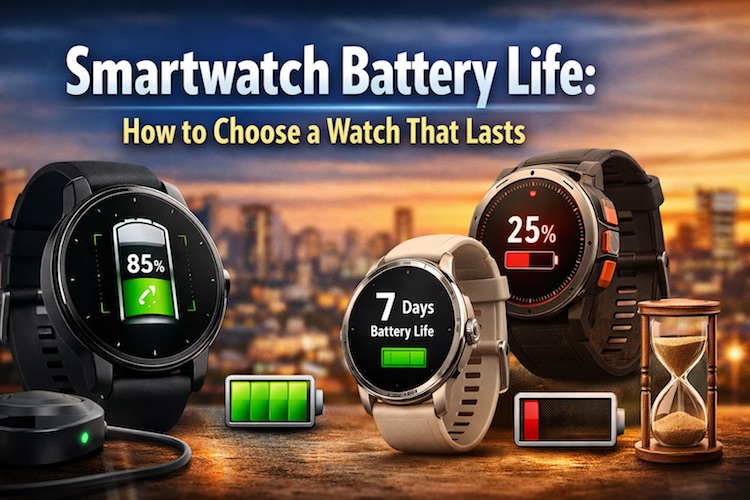
In this guide, we’ll break down smartwatch battery life in simple terms so you can choose a watch that fits your lifestyle, not just the marketing promises.
TL;DR – Quick Summary
- Average smartwatch battery life: 1–3 days
- Best battery life: Fitness and hybrid smartwatches (7–30 days)
- Biggest battery drainers: Always-on display, GPS, LTE
- Best choice for long battery life: Optimized software + efficient display
- Buying tip: Match battery life to your daily usage
What Is Smartwatch Battery Life?
Smartwatch battery life refers to how long the watch runs on a single charge during normal use.
Manufacturers often advertise “up to” battery life, but real-world usage usually tells a different story.
Must Read : Laptop Cooling Pads: Do They Really Work?
Typical Smartwatch Battery Ranges
| Smartwatch Type | Real-World Battery Life |
|---|---|
| Full-feature smartwatch | 1–2 days |
| Fitness smartwatch | 5–14 days |
| Hybrid smartwatch | 14–30 days |
| Heavy GPS usage | 8–24 hours |
Understanding these ranges helps you avoid daily charging frustration.
What Affects Smartwatch Battery Life?
Display Type and Screen Size
The display is the biggest power consumer.
- AMOLED: Bright and beautiful, but power-hungry
- LCD: Slightly better efficiency
- E-Ink / Transflective: Excellent battery life, fewer colors
Bigger screens drain batteries faster.
Always-On Display (AOD)
Always-on display looks great—but it drains power quickly.
- AOD ON: Battery drains 30–50% faster
- AOD OFF: Noticeably longer battery life
If endurance matters, turning off AOD is one of the easiest wins.
GPS and Location Tracking
GPS is essential for outdoor workouts, but it’s one of the biggest battery killers.
- Continuous GPS tracking can drain 10–20% per hour
- Dual-band GPS improves accuracy but uses more power
Tip: Enable GPS only during workouts.
Health and Fitness Sensors
Features like heart rate, sleep tracking, SpO₂, and stress monitoring run in the background.
They add value—but they also use battery continuously.
LTE and Connectivity
LTE-enabled smartwatches drain faster than Bluetooth-only models.
- Cellular data uses more power
- Frequent notifications cause more screen wake-ups
If you always carry your phone, LTE may not be worth the battery trade-off.
Smartwatch Battery Life Comparison (Realistic View)
| Feature Level | Battery Life | Best For |
|---|---|---|
| Full smartwatch | 1–2 days | App-heavy users |
| Fitness smartwatch | 7–14 days | Active lifestyles |
| Hybrid smartwatch | 2–4 weeks | Minimalists |
| Solar-assisted models | Extended | Outdoor adventurers |
Smartwatches With the Best Battery Life (By Category)
Best Overall Battery Life
Fitness-focused smartwatches consistently offer the longest battery life.
Why they last longer:
- Lightweight operating systems
- Fewer background apps
- Power-efficient displays
👉 Check price on long-battery fitness smartwatches if endurance matters more than apps.
Best Battery Life for Android Users
Android-compatible smartwatches vary widely in battery performance.
Look for:
- Efficient processors
- Battery capacity above 400mAh
- Strong software optimization
Must Read : CloneDVD Review – A Deep Dive into Features, Performance, and Real-World Use
Best Battery Life for iPhone Users
Apple Watch delivers premium features—but shorter battery life.
What to expect:
- Around 18–36 hours per charge
- Fast charging helps offset daily charging needs
👉 Learn more if ecosystem integration matters more than multi-day battery life.
Pros and Cons of Long Battery Life Smartwatches
| Pros | Cons |
|---|---|
| Less frequent charging | Fewer apps |
| Reliable for travel | Simpler interface |
| Better outdoor performance | Less flashy display |
| Peace of mind | Limited smart features |
Long battery life is a trade-off—but often a worthwhile one.
Real-World Use Cases: Which Battery Life Do You Need?
Office Professionals
- Notifications
- Calendar reminders
- Light fitness tracking
Recommended battery life: 2–3 days
Fitness Enthusiasts
- Daily workouts
- GPS tracking
- Sleep monitoring
Recommended battery life: 7–10 days
Travelers and Adventurers
- Multi-day trips
- Limited charging access
- Offline tracking
Recommended battery life: 14+ days
Casual Users
- Step counting
- Time and notifications
Recommended battery life: Hybrid or extended models
How to Extend Your Smartwatch Battery Life
You don’t always need a new watch.
Simple tweaks can significantly improve battery life:
- Disable always-on display
- Lower screen brightness
- Turn off unused sensors
- Reduce notification frequency
- Enable battery saver mode
These changes alone can add 1–3 extra days.
Smartwatch Battery Life vs Charging Speed
Fast charging is becoming more common.
Examples:
- 15 minutes of charging = 30–50% battery
- Full charge in under an hour on many models
Fast charging is convenient—but it doesn’t replace good battery life.
Buying Guide: How to Choose the Right Battery Life
Before buying, ask yourself:
How Often Do You Want to Charge?
Daily charging or once a week?
Must Read : Why Is My Phone Screen Pressing Itself? Causes, Fixes, and Long-Term Solutions
Do You Use GPS Frequently?
Heavy GPS users need larger batteries.
Do You Want Apps or Endurance?
More apps = shorter battery life
More endurance = fewer smart features
Platform and Ecosystem
Some ecosystems manage battery better than others.
Internal linking suggestion: best smartwatch for battery life
Common Myths About Smartwatch Battery Life
Bigger Battery Always Means Longer Life
False. Software optimization matters just as much.
All Smartwatches Need Daily Charging
Not true. Many models last over a week.
Smartwatch Batteries Degrade Quickly
With proper charging habits, batteries degrade slowly over years.
Frequently Asked Questions
What smartwatch has the longest battery life?
Fitness and hybrid smartwatches can last 2–4 weeks on one charge.
Is AMOLED bad for battery life?
AMOLED is efficient with dark themes but still drains faster than e-ink displays.
Does turning off Bluetooth save battery?
Minimal impact. Display usage matters more.
How long does a smartwatch battery last overall?
Most smartwatch batteries last 2–3 years before noticeable degradation.
Can smartwatch batteries be replaced?
Most models use sealed batteries and are not user-replaceable.
Is solar charging useful?
Solar charging extends battery life but doesn’t eliminate charging.
Are hybrid smartwatches worth it?
Yes, if battery life matters more than apps.
Final Verdict: Is Smartwatch Battery Life a Deal-Breaker?
Smartwatch battery life isn’t just a spec—it’s a daily experience.
If you value:
- Fewer charging interruptions
- Reliability while traveling
- Long-lasting performance
Then choosing a battery-efficient smartwatch is the smarter decision.
👉 Check price on battery-optimized smartwatches and pick one that fits how you actually live.


Nikhil Narkhede
Latest posts by Nikhil Narkhede (see all)
- Smartwatch Battery Life: How to Choose a Watch That Lasts - December 28, 2025
- How to update your drivers in Windows automatically - December 27, 2025
- Laptop Cooling Pads: Do They Really Work? - December 26, 2025